

Fresh Roasted Coffee Delivery Online: 7 Picks
Table of Contents
- Why Fresh Roasted Coffee Delivery Online Beats Grocery Aisle Beans
- Quick Comparison: Fresh Roasted Coffee Delivery Options at a Glance
- 1. Single Origin Favorites Sample Pack: Best for Exploring Origins
- 2. Best Sellers Sample Pack: Best First Order for New Customers
- 3. Single Origins and House Blends: Best for Daily Home Brewing
- 4. How to Read a Coffee Roast Date Before You Order
- 5. How to Store Fresh Coffee Beans So They Stay Fresh
- 6. Pricing Breakdown: What Fresh Roasted Coffee Delivery Costs
- Frequently Asked Questions
Last Updated: October 19, 2026
Why Fresh Roasted Coffee Delivery Online Beats Grocery Aisle Beans
Fresh roasted coffee delivery online solves a problem most grocery shoppers never think about: the beans on that shelf are rarely fresh. Coffee is a agricultural product, and it fades fast after roasting. Oxygen, light, and time strip away the aromatics that make a cup taste alive. At Tidal Bean Coffee, we roast every batch to order and ship it straight to your door, so the gap between roast day and brew day stays short. That single change does more for flavor than any brewing gadget you can buy.
The difference is real, and it shows up in the cup. Beans roasted weeks ago taste flat and woody. Beans roasted days ago taste bright and layered. A 2-ounce sample pack is a low-risk way to test that claim for yourself.

Below, we break down seven picks and practical rules so you can order with confidence.
Quick Comparison: Fresh Roasted Coffee Delivery Options at a Glance
Here is the short version before the details. Every option below comes from our own roast-to-order lineup, priced at $24.99 per pack.
| Option | Best For | What's Inside | Price |
|---|---|---|---|
| Single Origin Favorites Sample Pack | Exploring origins | Six 2oz packs from six countries | $24.99 |
| Best Sellers Sample Pack | First-time buyers | Six 2oz packs of top blends and origins | $24.99 |
| Single Origins and House Blends | Daily home brewing | Full bags of one origin or blend | $24.99 |
The sample packs let you taste before you commit. The full bags are for people who already know what they like.

1. Single Origin Favorites Sample Pack: Best for Exploring Origins
If you have never compared a Colombian bean to an Ethiopian one side by side, start here. This pack holds six 2-ounce samples, each from a different growing region, so you can taste how soil and process change flavor.
The lineup reads like a world tour. Brazil Santos brings cocoa and a smooth body. Colombia offers dried orange, berry, and chocolate. Costa Rica leans sweet with apple, raisin, and honey. Ethiopia Natural adds milk chocolate, fruit, and caramel. Honduras brings caramel, spice, and brown sugar, while Tanzania finishes with pear, floral notes, jasmine, and strawberry.
That range is the point. Two ounces is enough for a couple of brews, so you learn fast which origin suits your palate.
2. Best Sellers Sample Pack: Best First Order for New Customers
New customers face a simple question: which roast do I actually like? This pack answers it without guesswork. It gathers six of our best-selling coffees in 2-ounce packs, mixing dark blends with medium and light origins.
The 6Bean Blend is a dark house roast built for espresso. Cowboy Blend combines dark and medium roasts with cocoa, caramel, and vanilla tones. Breakfast Blend stays smooth and medium. Peru brings salted caramel and citrus, Mexico adds chocolate and green apple.

Order this one if you want a broad first taste of the whole catalog. It is also a sensible gift for someone setting up a home station.
3. Single Origins and House Blends: Best for Daily Home Brewing
Once you know your taste, buy full bags. Our single origins and house blends all sit at $24.99, so the decision comes down to flavor, not price. The Peru is a medium roast with salted caramel, silky sweetness, and citrus. The Ethiopia Natural runs medium-light with milk chocolate, fruit, and caramel. Colombia stays balanced with dried orange and chocolate.
For blends, the Medium Blend is a well-balanced house coffee with medium body and acidity. Breakfast Blend suits early mornings with walnuts, mild apple, raisin, and toffee. Cold Brew Coffee brings chocolate, toffee, and floral tones for cold or nitro brewing. Peru Decaf uses the Swiss Water Process for a caramel, citrus cup without caffeine.
Whole bean coffee for home brewing gives you the most control. Grind just before you brew.
4. How to Read a Coffee Roast Date Before You Order
A coffee roast date is the day the beans finished roasting, and it tells you more about freshness than any label claim. Roasters who print it are telling you exactly how old your coffee is. Roasters who print only a best-by date are hiding that number.
Single Origin Favorites Sample Pack →
Here is what to look for:
- Roast date, not best-by. The roast date is a fact. Best-by dates are estimates.
- Days since roast. A week or two off the roaster is ideal for most brewing.
- Whole bean over pre-ground. Grinding exposes surface area to oxygen.
- A named origin and process. Washed, natural, and pulped natural beans taste different.
According to guidance from the Specialty Coffee Association, freshness peaks in the days and weeks after roasting and fades from there. That is why roast-to-order shipping matters.
5. How to Store Fresh Coffee Beans So They Stay Fresh
Learning how to store fresh coffee beans protects the flavor you paid for. The rules are simple: keep beans whole, keep them sealed, and keep them away from air, light, heat, and moisture.
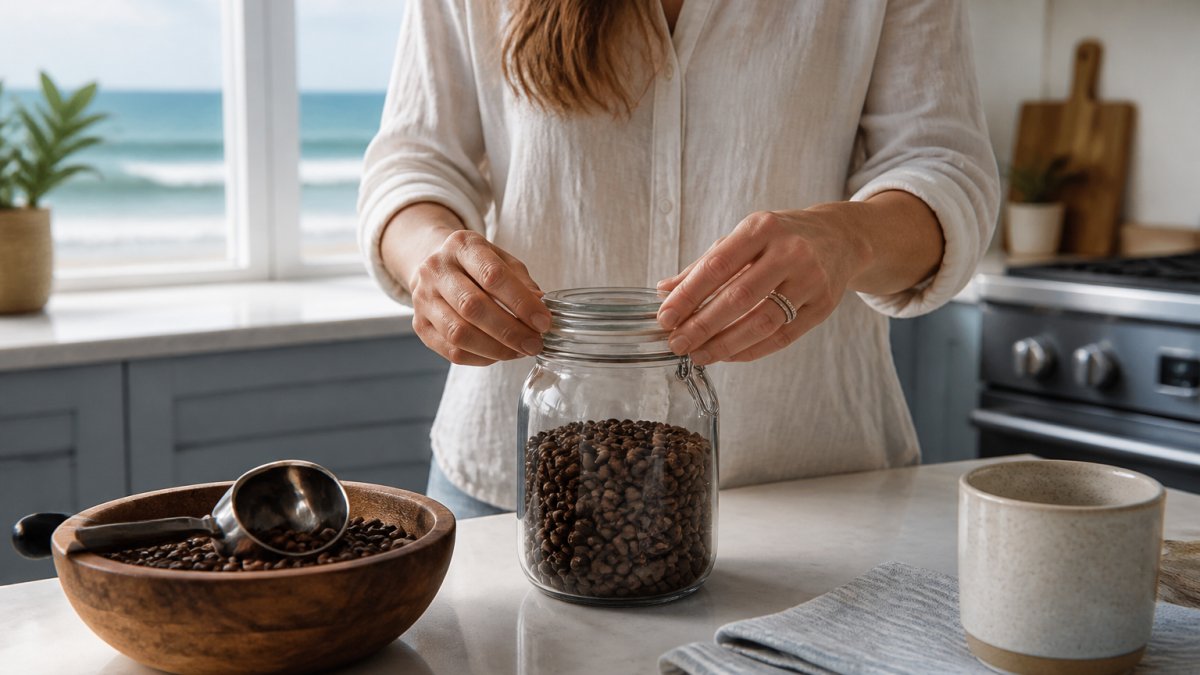
Follow this checklist:
- Store beans in an airtight container, ideally opaque
- Keep the container in a cool, dark cupboard
- Buy in quantities you will finish within a few weeks
- Grind right before brewing
- Avoid the fridge, where moisture and odors creep in
- Skip the freezer unless you seal beans in small portions
A common mistake is dumping beans into a clear jar on a sunny counter. Light and heat speed up staling. Store them dark and cool instead.
6. Pricing Breakdown: What Fresh Roasted Coffee Delivery Costs
Every item in our lineup is priced at $24.99. That covers both sample packs and full bags of single origins, blends, flavored coffee, and decaf. There are no hidden tiers or membership fees.
Here is how the value breaks down:
| Purchase Type | Price | What You Get | Best Use |
|---|---|---|---|
| Sample Pack | $24.99 | Six 2oz packs | Taste testing |
| Full Bag | $24.99 | One origin or blend | Daily brewing |
| Flavored or Decaf | $24.99 | Vanilla Hazelnut or Peru Decaf | Variety and caffeine-free |
The price per bag may look higher than a grocery store can. The tradeoff is freshness and roast-to-order shipping. You are paying for beans roasted close to your brew day, not beans that sat in a warehouse for months.
For anyone who wants a solid cup without cafe markup, the math works. A full bag brews many cups at home for a fraction of the cost of a daily shop run.
Frequently Asked Questions
How do I know if coffee is freshly roasted?
Check the roast date printed on the bag, not just a best-by date. Fresh roasted coffee delivery online should tell you when the beans were roasted, and Tidal Bean roasts every batch to order, so the bag ships soon after roasting. Beans hit their best flavor roughly 3 to 14 days after the roast date. If a bag has no roast date at all, treat that as a warning sign: you cannot tell how long it has sat in a warehouse.
Should I buy whole-bean or pre-ground coffee online?
Whole bean coffee for home brewing keeps its flavor far longer because the oils and aromas stay sealed inside the bean. Ground coffee stales within days of opening. Buy whole bean and grind just before brewing, whether you use a burr grinder, a blade grinder, or the store grinder. If you do not own a grinder yet, start with a sample pack to find a roast you like, then invest in a grinder for the full-size bags.
How should I store freshly roasted coffee beans?
Keep beans in an airtight, opaque container at room temperature, away from the stove, sunlight, and the fridge. Moisture and heat are the enemies: the fridge pulls in condensation every time you open the door. Buy in amounts you will finish in two to four weeks, and squeeze air out of the bag if you use the original packaging. Learning how to store fresh coffee beans properly matters as much as the roast date itself.
How soon should you use coffee after it is roasted?
Aim to brew within two to four weeks of the roast date for peak flavor. Beans release carbon dioxide for the first few days after roasting, which is why some brewers wait three to seven days before pulling espresso. After about four weeks, the flavor flattens noticeably. Ordering smaller amounts more often beats stocking up, and a sample pack is a low-cost way to test how fast you go through a bag.
How much coffee should I order for home use?
A typical home brewer making one or two cups a day finishes a 340g (12oz) bag in roughly two to three weeks, which fits the freshness window. If you work from home and brew several cups daily, order two bags at a time. Start with the 2oz sample packs at $24.99 to compare roasts before committing to full bags, then set a reorder rhythm that keeps you inside the four-week window.
Ordering fresh coffee online comes down to one habit: buy from a roaster who roasts to order and prints the roast date. Tidal Bean Coffee roasts every batch after you order, ships it fast and reliably, and keeps ordering simple so your home station never runs dry. Start with a sample pack, find your favorite origin, then set up a routine that keeps fresh beans on your counter. Get started with Tidal Bean Coffee and taste what roast-to-order freshness does for your morning cup.